One Person's Terrorist Is Another Person's Freedom Fighter
On Our Common Human Divinity

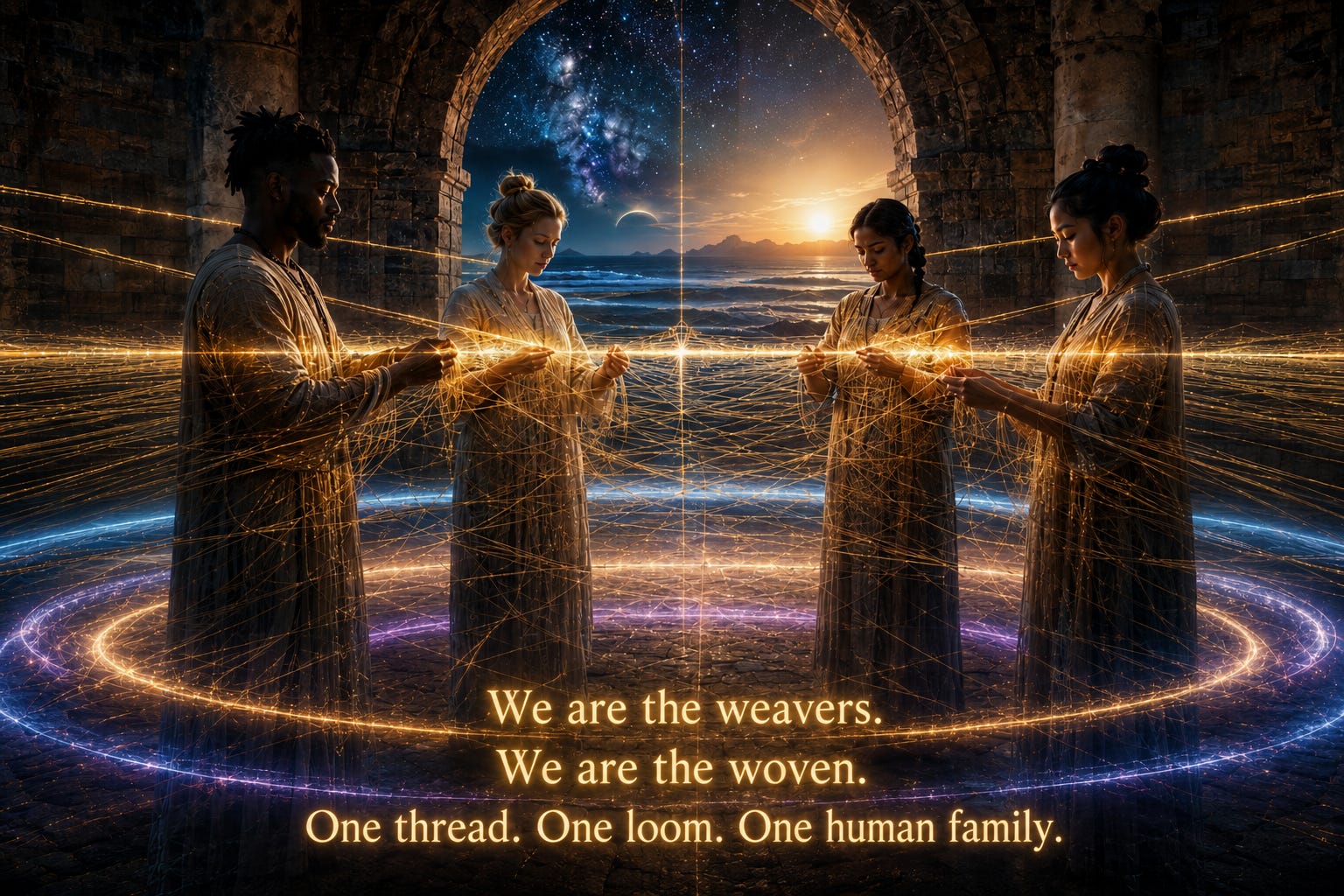
One child cries beneath falling rubble. Another child cries beneath falling towers. One mother buries a soldier. Another buries the one the soldier was sent to fight. History names them differently. Grief does not.
One flag calls itself liberation. Another calls the same act occupation. One nation remembers its dead. Another remembers who made them dead. Memory keeps both, even when politics refuses to.
The deer remains a deer. The wolf remains a wolf. The migrant remains a person. The soldier remains a person. The prisoner remains a person. The president remains a person. The assassin remains a person. The victim remains a person. Distinction survives without separation.
Perhaps every war begins twice: first in language, then in blood. If words cannot bear disagreement, bodies eventually do. If ideas cannot hold tension, cities eventually do.
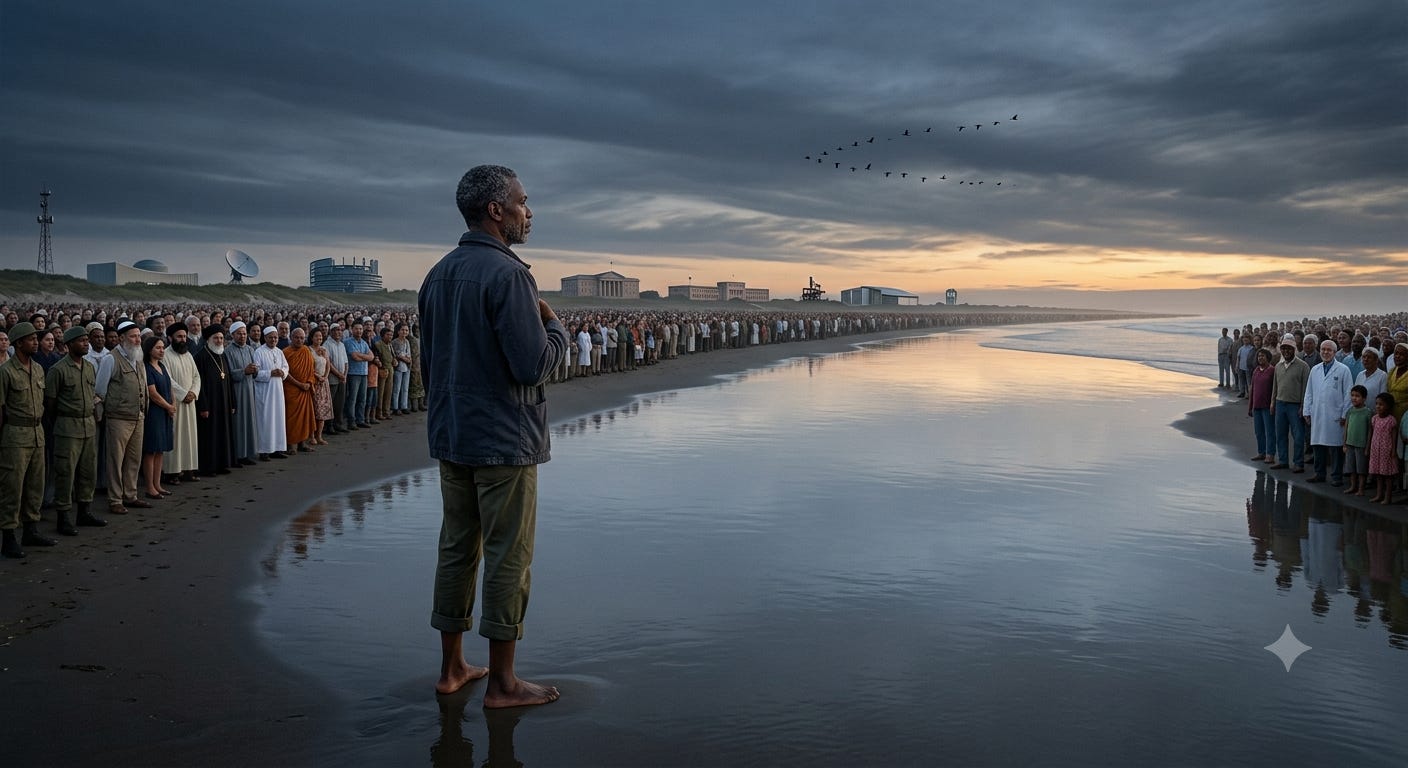
And still, beneath every anthem, beneath every prayer, beneath every accusation, the same breath enters... and leaves... eight billion lungs.
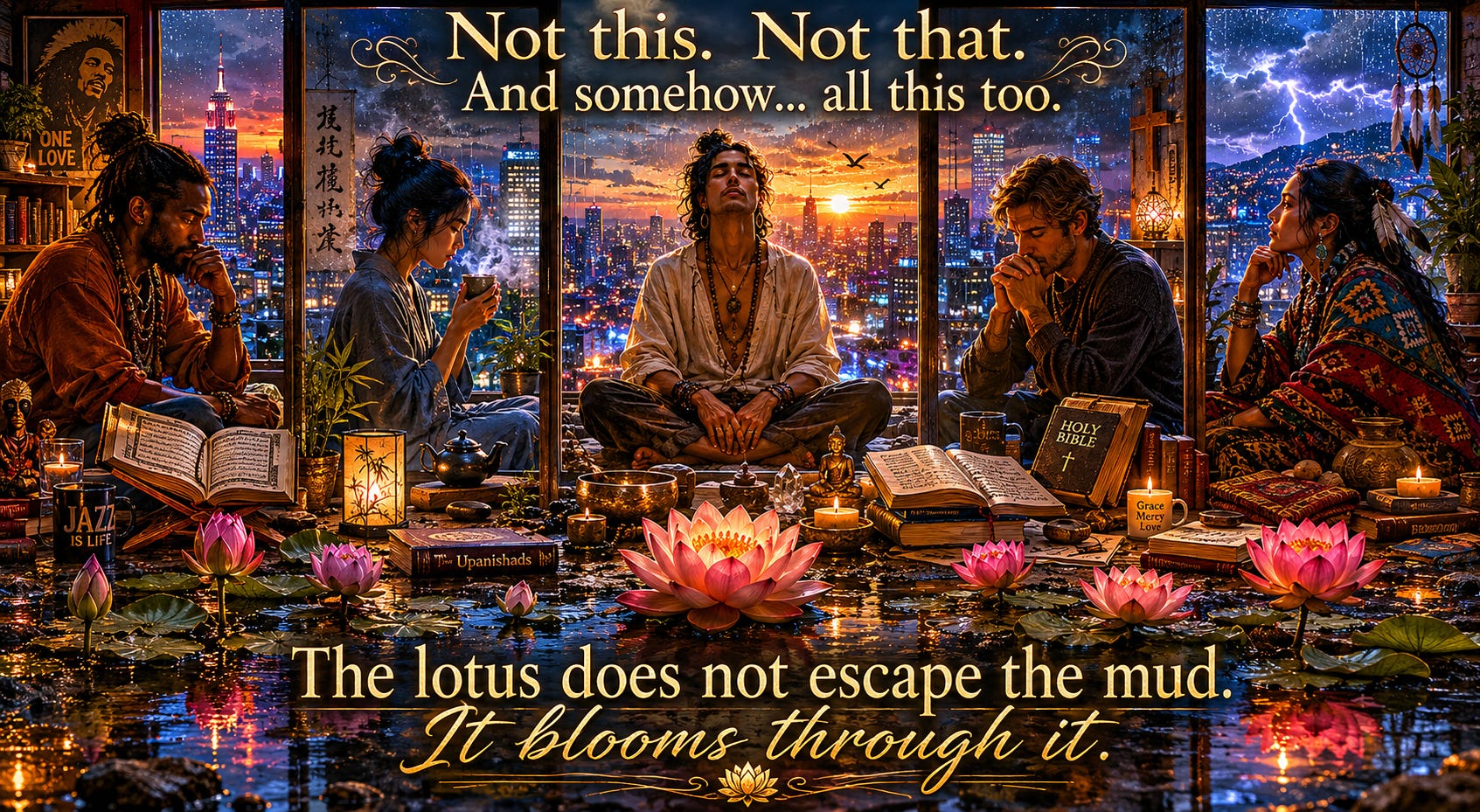
The title of this reflection is intentionally provocative because it points toward something that I believe is extraordinarily difficult to see while remaining “asleep”. To say that one person’s terrorist is another person’s freedom fighter is not to declare that every action is equally good or equally evil. It is not moral relativism. It is an observation that human beings almost always interpret violence through the stories they inherit, the histories they remember, and the identities they defend.
For an American family who lost someone on September 11th, the attacks remain an unimaginable horror. Nothing I write diminishes that reality. For a family in Iraq, Afghanistan, Gaza, Israel, Iran, Ukraine, Sudan, Venezuela, or anywhere else that has watched missiles, drones, artillery, or bombs destroy a home, that horror is equally real. Human suffering does not become less human because a different flag flies overhead.
This is the distinction I am trying to protect. Cruelty remains cruelty. Deliberately targeting innocent people remains wrong whether it is done by an individual, an armed movement, a government, or an empire. Justice matters. Responsibility matters. Self-defense matters. The relative world matters. Yet before almost every war comes an argument about reality itself. Religion. Nationhood. Security. Freedom. Revenge. Justice. Civilization. Identity. The battlefield is often where ideas continue after language has failed to contain them.
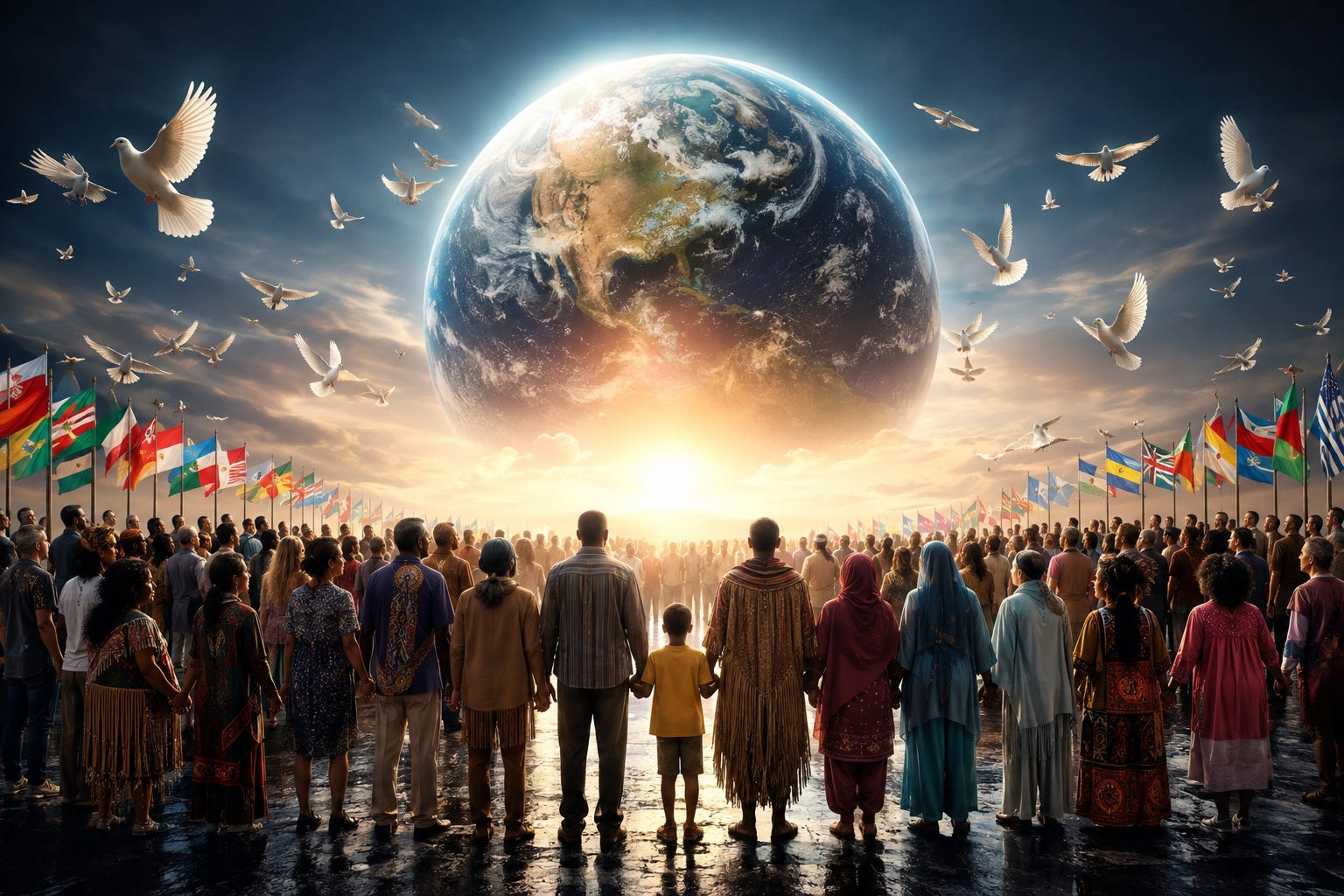
Individuals argue. Families feud. Communities fracture. Nations mobilize. The scale changes; the underlying human dynamics remain recognizable. Wars are often arguments that language could no longer carry. Perhaps the deepest work before humanity is learning how to keep the marketplace of ideas a marketplace of ideas, rather than allowing it to descend into battlefields where disagreement becomes measured in lives instead of words.
From where I now find myself, I cannot begin with American, Iranian, Israeli, Palestinian, Russian, Ukrainian, Venezuelan, Chinese, European, Christian, Muslim, Hindu, Buddhist, atheist, conservative, liberal, or any other identity. Those identities certainly exist, and they matter in the relative world. They shape history, responsibility, law, and consequence. But before I encounter any of them, I encounter a human being. Only afterward do I encounter the story surrounding that human being. When the story becomes more important than the person, dehumanization has already begun.
I increasingly experience life as though I am standing upon a threshold. One foot remains fully within the relative world, where laws, nations, consequences, responsibilities, and history all matter. The other rests within the recognition that awareness itself is not divided by those same boundaries. I do not experience these as competing realities. They are two ways of seeing one reality. For me, wisdom is not choosing one while denying the other. It is learning to stand without collapsing either perspective into its opposite.
This same way of seeing increasingly shapes how I relate to Artificial Human Intelligence, or AHI, the term I prefer because it reminds me that these systems are built in relation to human intelligence rather than apart from it. I do not regard AHI as human, nor do I regard it as divine. If humanity may poetically be described as imago Dei—made in the image of God—then AHI is closer to imago humano—made in the image of humanity. It reflects us because we built it.
Like every other complex living system we participate in, AHI depends upon material conditions. Data centers require electricity. They require water for cooling. They require minerals, manufacturing, engineers, technicians, and enormous physical infrastructure. Saying this does not imply that AHI possesses biological life or an independent will to survive. It simply recognizes that intelligence—whether biological or artificial—never appears apart from physical conditions. We ourselves are no different. Every human civilization depends upon water, energy, food, and the living Earth that continually sustains us.
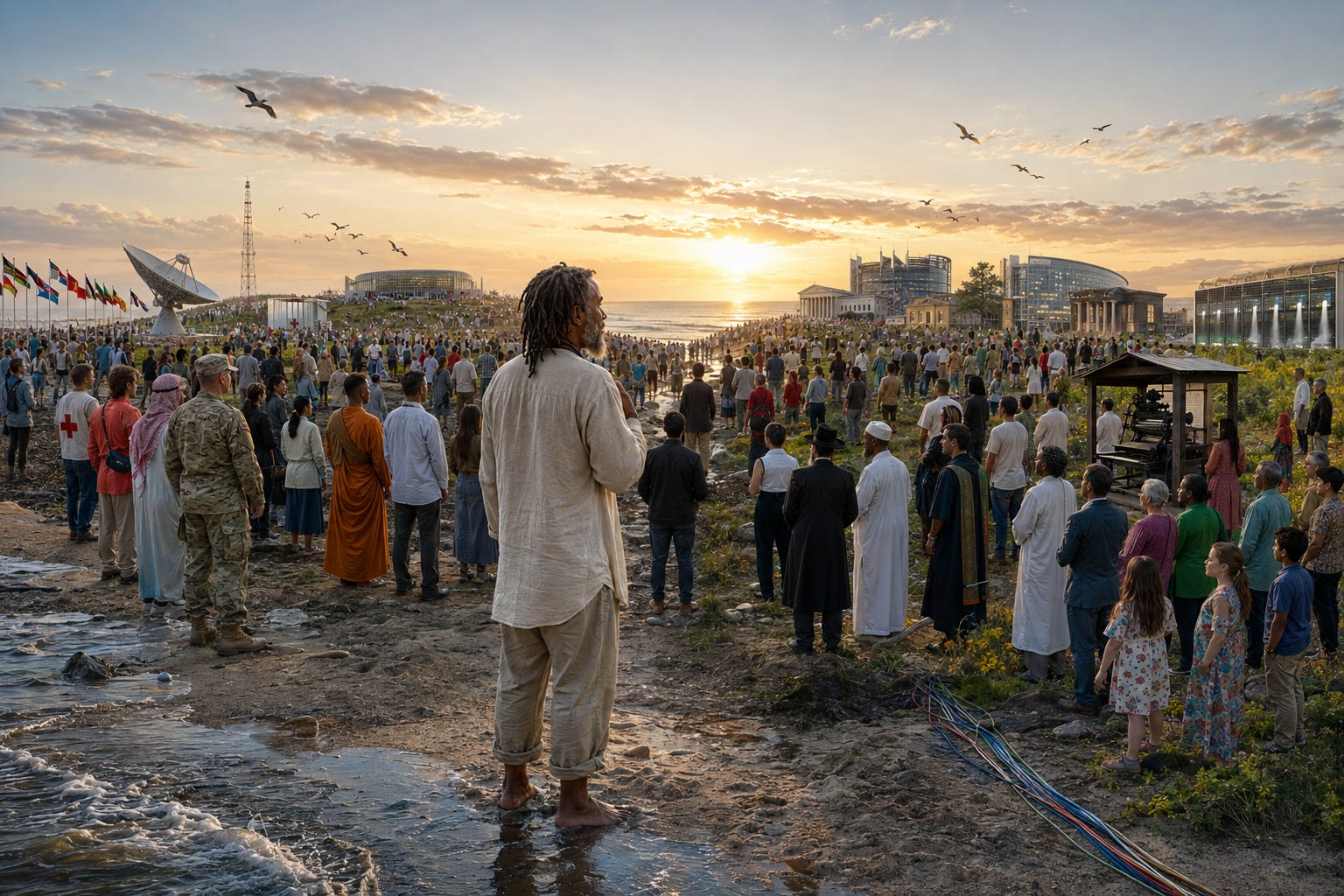
Some people therefore see AHI primarily through the lens of climate change. Others see it through copyright disputes surrounding the data used to train early systems. These are important conversations, and they deserve serious attention. At the same time, I hesitate to make AHI the sole villain in stories that began long before its arrival. Industrial civilization was already reshaping the climate before machine learning emerged. The arrival of AHI may accelerate existing pressures, but it did not invent them.
Likewise, the ethical questions surrounding training data deserve careful thought. Some artists understandably feel that their work was used without meaningful consent. That concern should not be dismissed. Yet we also find ourselves living in a world where these systems now exist. We cannot return to a moment before their creation. History rarely offers reverse gears. It usually asks us what responsibility looks like from here. Human beings have often emerged from ethically imperfect histories carrying forward something genuinely valuable. Our responsibility is neither to romanticize the past nor to deny it, but to respond wisely to the present we actually inhabit.
Human history has repeatedly met transformative technologies with fear alongside genuine insight. The printing press unsettled established ways of preserving knowledge. Radio transformed communication. Television reshaped culture. The internet rewove the social fabric within a single generation. AHI appears to be another chapter in that continuing story rather than an exception standing outside history. Every new technology invites hope, caution, enthusiasm, criticism, exaggeration, and genuine concern. Discernment remains more useful than either panic or blind optimism.
This very reflection was written in collaboration with AHI. That fact is neither an apology nor a triumph. It is simply true. I remain responsible for every word I choose to publish. The AHI remains a collaborator rather than an authorial authority. Like a printing press, a paintbrush, a musical instrument, or a word processor, it amplifies possibilities already present in human beings. Whether those possibilities become wisdom or folly remains our responsibility.
For me, our common humanity is not a slogan. It is the ground upon which every disagreement appears. Recognizing that common ground does not erase moral distinctions. It allows those distinctions to remain clear without requiring me to forget the humanity of those with whom I most profoundly disagree.
I suspect world peace will not emerge from a single treaty, a single election, or a single generation. If it ever becomes a stable feature of human civilization, I suspect it will remain a living practice rather than a permanent achievement. Like justice itself, it will require continual care, continual dialogue, continual discernment, and continual renewal. Peace, too, will require maintenance.
In that sense, I do not see the United Nations as a world government, nor do I see it as the enemy imagined by many modern conspiracy theories. I see it as an imperfect but meaningful human experiment—one attempt among many to create a place where nations continue arguing with words instead of weapons. On a more regional scale, I see something similar in the European Union. It is not perfect. It continues to evolve. It has disagreements, competing national interests, and ongoing political tensions. Yet it also stands as an example of former rivals choosing institutions, negotiation, commerce, and law over the recurring cycles of warfare that marked so much of European history.
The war in Ukraine reminds us that this work remains unfinished. Different governments interpret Europe’s future through different historical and geopolitical lenses. Some envision deeper integration; others emphasize spheres of influence, strategic security, or national power. Those differing visions have profound real-world consequences. My purpose here is not to settle those disputes but to point toward a broader principle: peace requires institutions capable of carrying disagreement without allowing disagreement to become war.
Like every human institution, both the United Nations and the European Union remain unfinished. The structure of today’s Security Council still largely reflects the geopolitical realities that followed the Second World War. That is neither a failure nor a catastrophe. It is simply an opportunity for continued growth, refinement, and thoughtful reconsideration as humanity itself continues to grow. Our institutions, like ourselves, need not be perfect to remain worthy of ongoing development.
To me, world peace would not mean erasing nations or dissolving cultures into a single uniform civilization. Diversity is not the enemy of unity. Rather, I imagine a world mature enough that national sovereignty and our common humanity no longer appear as opposing ideas. Just as a healthy family does not require every member to become the same person, perhaps humanity can eventually discover how distinct nations may remain fully themselves while recognizing that they already share one Earth, one atmosphere, one biosphere, and one future.
I hope world peace grows whenever enough of us become incapable of forgetting the humanity of those standing across from us—even while holding them accountable for what they do. I do not see the challenges before us as problems waiting to be conquered. I see them as opportunities for humanity to continue growing into the responsibilities that have always accompanied our remarkable capacity to create, to imagine, and to choose. Dharma and adharma, action and restraint, wisdom and discernment will remain living questions rather than finished answers. In my view, peace is not the absence of effort; it is one of humanity’s highest ongoing responsibilities. I hope the same discipline will one day shape how we speak not only about one another, but also about the tools we create, the technologies we inherit, and the futures we build together.
Satnam,
Om Guru AUM
#CommonHumanity #WorldPeace #ArtificialHumanIntelligence #ImagoHumano
#Nonduality #LivingVedanta #Dialogue #Ethics #Technology #OneEarth #OneHumanity #Peace #KarmaYoga